If you play, you don’t have to be stuck with plain sleeves. There are loads of cool art sleeves, but they need a bit of help to last. Here’s how I sleeve my decks.
What you need for one deck
- Art sleeves (from an ETB, the Pokémon Center and so on)60
- Clear outer sleeves (like Dragon Shield Outer Sleeves)60
- Or for plain sleeves: inner sleeves plus normal sleeves60 of each
Which sleeves to buy
Dragon Shield Matte sleeves are the best you can get. They’re the toughest, they shuffle really smoothly and they last ages. The catch is they’re also the most expensive (apart from art sleeves).
If you want good sleeves that cost less, Gamegenic ones are a good middle ground between price and quality. They wear out a bit faster, but they’re cheaper, so you can keep spares and swap out any that get worn. They’re still good enough for events.
| Dragon Shield Matte | Gamegenic | |
|---|---|---|
| Quality | Best you can get | Good |
| How long they last | Ages | Wear a bit faster |
| Price | Most expensive | Cheaper |
| Good for events? | Yes | Yes |
Don’t mix sleeves from different packs in one deck, even if they’re the same colour and brand. Each batch can come out slightly different, like a tiny change in colour or size, and that can make some cards stand out from the rest. That counts as a marked card. When you buy sleeves for a deck, buy enough from one batch, plus some spares.
Art sleeves
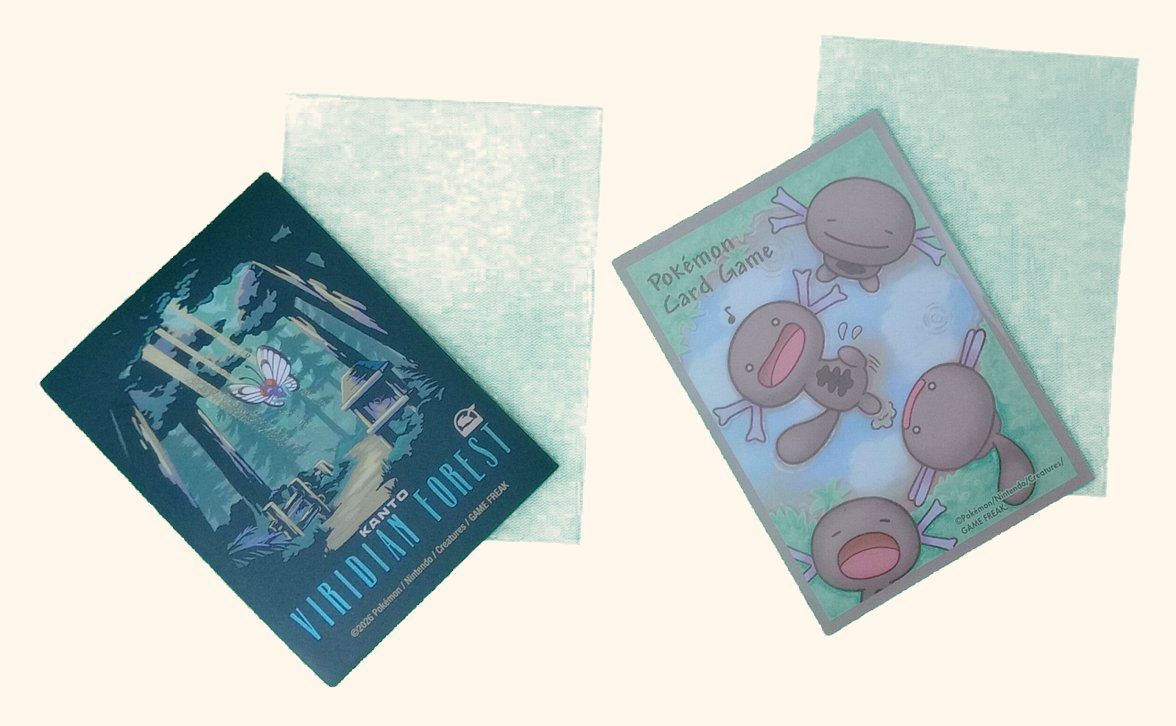
The Pokémon Center and the Japanese Pokémon Center sell sleeves with really nice designs, like these Viridian Forest and Wooper ones. Every Elite Trainer Box comes with a pack of art sleeves too.
The catch is they’re not as tough as sleeves from brands like Dragon Shield. They’re thinner, so after lots of shuffling the edges can split, and they scuff really easily. ETB sleeves especially.
Make them last with outer sleeves
The fix is to put a clear outer sleeve over the top, like Dragon Shield Outer Sleeves. They’re clear, so you can still see the art, and they take the scuffs and wear instead of your art sleeve. If you like the sleeves from your ETB, this is how to use them without wrecking them.
This is how I use art sleeves: the card goes in the art sleeve, then a clear outer goes over the top. That’s still double sleeving, just with the art sleeve on the inside. I don’t add an inner sleeve as well (that would be triple sleeving), because the deck gets too thick to hold and shuffle. Art sleeve plus clear outer is the best compromise.
Smoke inner sleeves
Normal inner sleeves are clear on both sides. Smoke inners, like Dragon Shield Perfect Fit Smoke, are clear on the front, but the back is tinted a smoky colour instead of clear.
Why does that help? Some art sleeves have light colours, and with clear inners you can sometimes see the outline or the back of the card underneath showing through. The tinted back hides it, so every card looks exactly the same from behind, and the front still shows the card perfectly.
They’re also a snug inner sleeve, so they work for double sleeving.
At a tournament, all your sleeves have to look exactly the same from the back. If some cards can be told apart, like a card showing through, a scuffed sleeve or a different sleeve, that’s called a marked card, and you can get a penalty. Check your sleeves before you play, and swap any that are worn.
How to double sleeve
Double sleeving isn’t just extra protection. It makes mash shuffling easier too. The inner sleeve makes each card a tiny bit thicker in the middle than at the edges, so when you push the two halves of your deck together, the edges have a little lip to catch on. The cards slide in neatly every time instead of getting stuck.
It works the same whether it’s an inner sleeve inside a normal sleeve, or an art sleeve inside a clear outer.
Double sleeving step by step
- Card into the inner sleeve upside down
Slide the card into the inner sleeve (or your art sleeve) bottom first, so the open end is at the bottom of the card.
- Into the outer sleeve, open end first
Now slide it into the outer sleeve (a normal sleeve, or a clear outer if you’re using art sleeves) with the open end going in first. The two openings end up at opposite ends, so nothing can slip out or get in.
- Check it is the right way up
The card should now be the right way up, with the open end of the outer sleeve at the top of the card.
- Hold your cards the right way
When you hold your hand, the open edge should point away from you, towards your opponent.
My decks
Buy a few spare sleeves of each kind. If one splits mid-season, you can swap it so all your sleeves still match.